Jangan lewatkan paket umrah promo spesial bulan Januari tahun 2026...



The Difference Between Hajj and Umrah: Tracing Their Historical Roots
This article explores the historical and practical differences between Hajj and Umrah — from the time of Prophet Ibrahim ‘Alaihissalam to the era of Prophet Muhammad Shallallahu ‘Alaihi Wasallam — including their origins, rituals, and distinct spiritual purposes in Islam.
Ibnu Khidhir
8/17/20254 min read
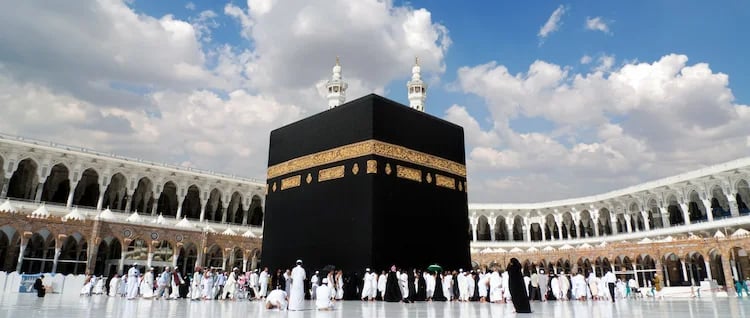
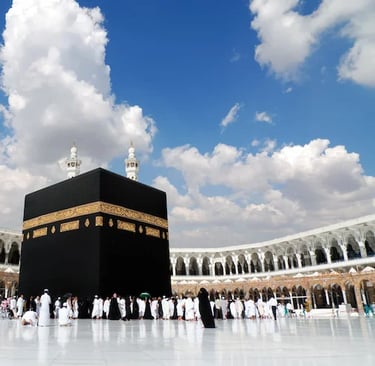
Every devout Muslim dreams of visiting the sacred city of Makkah. Two of the most significant forms of worship associated with this blessed journey are Hajj and Umrah. Both hold immense spiritual value and represent submission to Allah Subhanahu Wa Ta‘ala. Although they are similar in some outward rituals — such as circumambulating the Ka‘bah and wearing ihram — Hajj and Umrah differ in their time, obligation, and historical origin.
As modern travel becomes easier, Muslims across the world perform Umrah frequently throughout the year, while Hajj remains limited to specific months and a set quota. To fully understand the meaning and essence of these acts of worship, it is essential to explore their historical foundations, beginning from the era of Prophet Ibrahim ‘Alaihissalam to the time when Prophet Muhammad Shallallahu ‘Alaihi Wasallam perfected and clarified their rites for the Muslim community.
1. The Historical Origin of Hajj
The origins of Hajj date back to the story of Prophet Ibrahim ‘Alaihissalam, who was commanded by Allah to leave his wife Hajar and his infant son Isma‘il in the barren valley of Makkah. From this event emerged the ritual of Sa‘i between the hills of Safa and Marwah, commemorating Hajar’s desperate search for water. When the spring of Zamzam miraculously gushed forth, the valley became a place of life and, over time, grew into the city of Makkah.
Later, Allah commanded Ibrahim and his son Isma‘il to build the Ka‘bah, as mentioned in the Qur’an:
“And (mention, O Muhammad), when We designated for Abraham the site of the House, (saying), ‘Do not associate anything with Me and purify My House for those who perform Tawaf and those who stand (in prayer), and those who bow and prostrate.’”
(Qur’an, Surah Al-Hajj 22:26)
After completing the construction of the Ka‘bah, Allah ordered Ibrahim to call humanity to perform Hajj:
“And proclaim to the people the Hajj; they will come to you on foot and on every lean camel; they will come from every distant pass.”
(Qur’an, Surah Al-Hajj 22:27)
From that time, Hajj became a symbol of monotheism and obedience to Allah, passed down through generations. Although pagan practices later corrupted its purity during the era of ignorance (Jahiliyyah), Prophet Muhammad Shallallahu ‘Alaihi Wasallam restored it to its original, pure form.
2. The History and Development of Umrah
Unlike Hajj, the Umrah pilgrimage can be performed at any time of the year. Its roots also trace back to Prophet Ibrahim ‘Alaihissalam, but it was practiced on a smaller scale. Before Islam, the people of Arabia already knew of the ritual of circumambulating the Ka‘bah, though they mixed it with acts of idolatry.
Umrah was redefined and perfected by Prophet Muhammad Shallallahu ‘Alaihi Wasallam, particularly after the famous event of Hudaybiyyah (6 AH). The Prophet and his companions had set out from Madinah intending to perform Umrah, but were prevented by the Quraysh tribe. After the Treaty of Hudaybiyyah, it was agreed that the Muslims would return the following year. Thus, in 7 AH, the Prophet Shallallahu ‘Alaihi Wasallam performed Umrah al-Qadha, the compensatory Umrah for the one that had been postponed.
From that time, Umrah became an established form of worship with clearly defined steps, as demonstrated by the Prophet Shallallahu ‘Alaihi Wasallam himself. Later, during his Farewell Hajj (Hajjat al-Wada‘), he consolidated the final rulings on both Hajj and Umrah, completing the framework of pilgrimage in Islam.
3. Differences in Time and Legal Rulings
One of the most fundamental distinctions between Hajj and Umrah lies in their timing.
Hajj can only be performed during the months of Hajj — Shawwal, Dhu al-Qa‘dah, and Dhu al-Hijjah — as stated in the Qur’an:
“Hajj is [in] well-known months.”
(Qur’an, Surah Al-Baqarah 2:197)Umrah, on the other hand, can be performed at any time throughout the year.
From a legal (fiqh) perspective, the scholars agree that Hajj is an obligatory duty upon every Muslim who is physically and financially capable, based on the Qur’anic verse:
“And Hajj to the House is a duty that mankind owes to Allah — those who can afford the journey.”
(Qur’an, Surah Ali ‘Imran 3:97)
As for Umrah, scholars differ slightly. Imams Al-Shafi‘i and Ahmad view Umrah as obligatory once in a lifetime for those who can afford it, while Imams Malik and Abu Hanifah consider it a highly recommended Sunnah (Sunnah Mu’akkadah). This difference stems from varying interpretations of the Qur’anic verses and Prophetic hadith related to Umrah.
4. Differences in Rituals and Performance
Although both Hajj and Umrah begin with the state of ihram, their rites (manasik) and the places involved differ significantly.
The pillars of Umrah are:
Ihram (intention from the miqat),
Tawaf (circumambulation of the Ka‘bah),
Sa‘i between Safa and Marwah,
Tahallul (shaving or trimming the hair).
The pillars of Hajj are:
Ihram,
Standing at Arafah (Wuquf),
Tawaf al-Ifadah,
Sa‘i,
Tahallul,
Order (Tartib).
The standing at Arafah (Wuquf) is the defining element that distinguishes Hajj from Umrah. Without it, Hajj is invalid. As the Prophet Muhammad Shallallahu ‘Alaihi Wasallam said:
“Hajj is (standing at) Arafah.”
(Hadith narrated by Tirmidhi and Ahmad)
Moreover, Hajj involves visiting multiple sacred sites — Arafah, Muzdalifah, and Mina — while Umrah is confined to rituals within Masjid al-Haram in Makkah.
Both Hajj and Umrah connect Muslims to a continuous chain of faith that stretches back to the earliest prophets. From the devotion of Hajar running between Safa and Marwah to the call of Ibrahim ‘Alaihissalam echoing through time, these acts of worship represent the unbroken message of tawheed (monotheism) and surrender to Allah’s will.
Prophet Muhammad Shallallahu ‘Alaihi Wasallam perfected these rituals and left behind clear guidance for all Muslims. By understanding the historical and spiritual distinctions between Hajj and Umrah, believers can perform these acts not merely as rituals, but as living expressions of faith and remembrance of prophetic history — a journey that continues to unite the hearts of Muslims across the world.
Related Article:
>> Complete Umrah Guide for First-Time Pilgrims (2025 Edition)
>> Review of Hotels with Kaaba / Haram View
>> How Much Does Umrah Cost in 2025? (Complete Budget Breakdown)
>> Best Umrah Travel Insurance Options
>> How to Plan a 5-Day Umrah Itinerary (Step-by-Step Guide)
>> 7 Best Kaaba-View Hotels in Makkah
>> The Difference Between Hajj and Umrah: Tracing Their Historical Roots